Mathematics and Statistics
Recursos
2001–2050 de 6751
Cerca avançada
-
 Stochastic Control of Partially Observable Systems
 -
 Physical Problems Solved by the Phase-Integral Method
 -
 Numerical Ranges II
 -
 Algebra and Geometry
 -
 Graded Rings and Graded Grothendieck Groups
 -
 Tolerance Graphs
 -
 Spectral Decomposition and Eisenstein Series
 -
 Network Analysis
 -
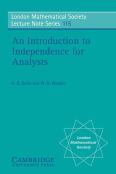 An Introduction to Independence for Analysts
 -
 Oeuvres complètes
 -
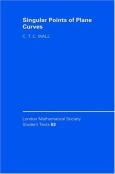 Singular Points of Plane Curves
 -
 Solving Polynomial Equation Systems III
 -
 Computational Aeroacoustics
 -
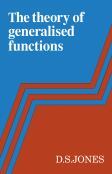 The Theory of Generalised Functions
 -
 Journées Arithmétiques 1980
 -
 A Brief Guide to Algebraic Number Theory
 -
 Fundamentals of Nonparametric Bayesian Inference
 -
 Control Theory for Partial Differential Equations
 -
 Introdction to Measure and Probability
 -
 Geometry and Integrability
 -
 Hamiltonian Mechanics of Gauge Systems
 -
 Pseudo-reductive Groups
 -
 An Introduction to the Modeling of Neural Networks
 -
 Basics of Nonlinearities in Mathematical Sciences
 -
 The Force of Symmetry
 -
 A First Course in Statistical Programming with R
 -
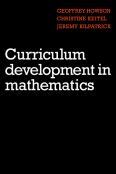 Curriculum Development in Mathematics
 -
 Decision Behaviour, Analysis and Support
 -
 Central Simple Algebras and Galois Cohomology
 -
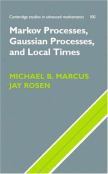 Markov Processes, Gaussian Processes, and Local Times
 -
 Applied Time Series Econometrics
 -
 A Pathway Into Number Theory
 -
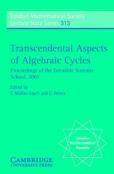 Transcendental Aspects of Algebraic Cycles
 -
 Representations of Lie Algebras
 -
 Model Theory with Applications to Algebra and Analysis
 -
 Paradox and Paraconsistency
 -
 Inverse Problems and Data Assimilation
 -
 Managing Portfolio Credit Risk in Banks
 -
 Optimal Control and Geometry: Integrable Systems
 -
 Cohomological Methods in Transformation Groups
 -
 Symplectic Topology and Floer Homology
 -
 Moonshine beyond the Monster
 -
 A Mathematical Introduction to String Theory
 -
 A Guide to MATLAB
 -
 Operator Algebras and Applications
 -
 The Toda Lattice and Universality for the Computation of the Eigenvalues of a Random Matrix
 -
 Topological Methods in Group Theory
 -
 Classification Problems in Ergodic Theory
 -
 Forecasting, Structural Time Series Models and the Kalman Filter
 -
 Transfer Learning
2001–2050 de 6751